
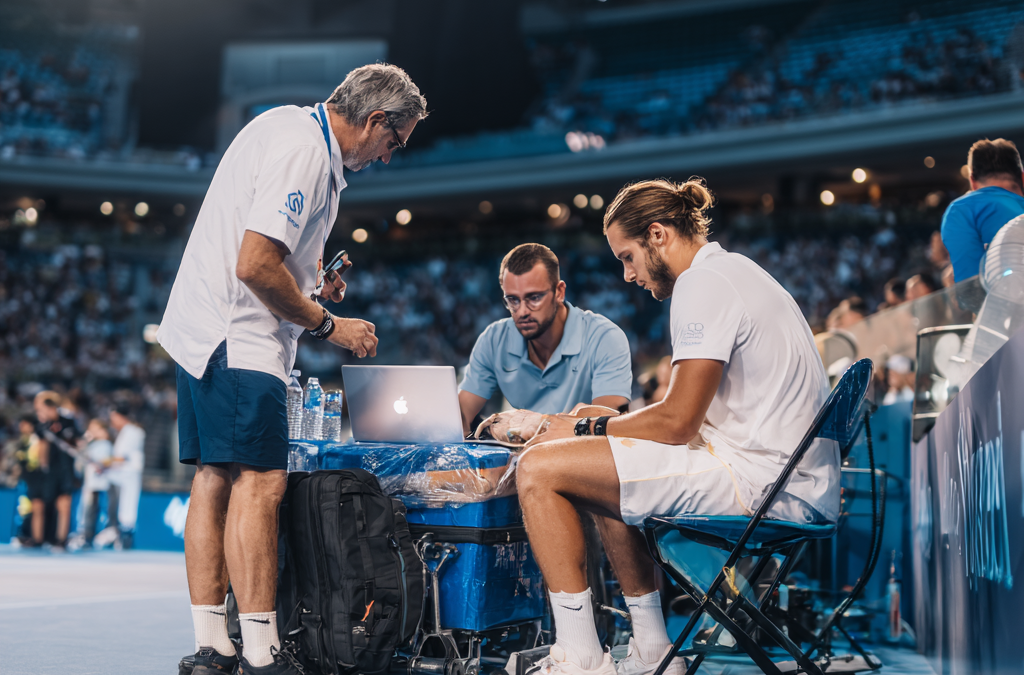
Behind the Scenes: How Pro Teams Prepare for the Australian Open
Coaches, physios, analytics, and recovery teams
When fans tune into the Australian Open, they see players alone on court—battling heat, pressure, and opponents. What they don’t see is the tightly coordinated professional machine operating behind the scenes.
At the first Grand Slam of the season, preparation isn’t just about hitting forehands. It’s about systems—coaching strategy, physical readiness, recovery science, and real-time analytics—all aligned to survive the most physically punishing Slam on the calendar.
The Australian Open problem teams must solve
The Australian Open presents a unique challenge stack:
-
peak summer heat
-
hard-court physical load
-
jet lag from global travel
-
night matches and disrupted sleep
-
best-of-five matches (men)
-
short recovery windows
Top teams don’t “wing it.” They engineer readiness weeks—sometimes months—in advance.
The team around a modern pro
At the elite level, a player is supported by a core performance group, often including:
-
Head coach
-
Fitness coach / strength & conditioning specialist
-
Physiotherapist
-
Sports medicine or recovery specialist
-
Performance analyst / data consultant
-
Sometimes: sports psychologist or nutritionist
Not every player has a massive entourage—but the functions are almost always covered.
1. Coaches: building a January game plan
Pre-tournament preparation starts long before Melbourne
In the weeks leading up to the Australian Open, coaches focus on:
-
pattern efficiency (shortening points when possible)
-
serve +1 dominance
-
high-margin rally tolerance
-
heat-adjusted pacing
The goal isn’t peak form on day one—it’s sustainable form across seven matches.
Match-specific planning
Once the draw is released, coaches:
-
study opponent tendencies
-
identify return patterns and serve locations
-
plan “Plan A, B, and C” scenarios
This preparation allows players to conserve energy by playing smarter, not harder.
2. Fitness & conditioning: heat-proofing the body
The Australian Open exposes any fitness gaps brutally.
Heat adaptation
Many teams incorporate:
-
heat training blocks
-
sauna or hot-environment sessions
-
hydration stress simulations
The aim is improving:
-
sweat efficiency
-
cardiovascular stability
-
core temperature control
Heat tolerance can be the difference between winning in four sets—or collapsing in the fifth.
Hard-court durability
Conditioning programs emphasize:
-
eccentric strength (for braking and deceleration)
-
hip and ankle stability
-
posterior-chain strength
-
footwork efficiency
Hard courts punish inefficient movers, especially over two weeks.
3. Physios: injury prevention and daily maintenance
Physiotherapists are among the most valuable people on-site during the Australian Open.
Daily responsibilities include:
-
pre-practice activation
-
joint mobility and soft tissue work
-
monitoring inflammation and soreness
-
post-match treatment
Physios help decide:
-
whether a player practices or rests
-
how hard sessions should be
-
what areas need protection or unloading
Many injuries don’t happen suddenly—they’re the result of unmanaged fatigue.
4. Recovery teams: winning between matches
At the Australian Open, recovery is treated like a performance event.
Cooling strategies
Teams manage heat load using:
-
ice towels
-
cooling vests
-
cold immersion (case-dependent)
-
rapid post-match cooling protocols
Lowering core temperature quickly can dramatically improve next-day readiness.
Sleep engineering
Night matches complicate recovery. Teams:
-
control light exposure
-
delay stimulation
-
prioritize post-match nutrition timing
-
create consistent sleep routines
Sleep loss is cumulative—and dangerous in a Slam.
5. Nutrition & hydration: precision, not guesswork
Elite teams rarely “drink when thirsty.”
Hydration protocols often include:
-
sweat-rate testing
-
sodium replacement strategies
-
carbohydrate-electrolyte balance
During long matches, especially five-setters, fueling errors can cause:
-
cramping
-
mental fog
-
late-match energy crashes
January tennis demands fuel discipline.
6. Analytics: data-driven edges in a brutal environment
Modern pro teams increasingly rely on analytics to reduce physical cost.
Performance analysts track:
-
rally length tolerance
-
serve effectiveness by location
-
return positioning success
-
shot patterns under pressure
The goal:
Win more points with less effort.
Analytics help identify:
-
when to attack
-
when to extend rallies
-
when a player should shorten points to preserve energy
At the Australian Open, that efficiency can be decisive.
7. On-site adaptation: the real test
Preparation is important—but adaptability is everything.
During the tournament, teams constantly reassess:
-
heat forecasts
-
scheduling changes
-
match duration
-
recovery metrics
A five-set night match can completely alter the next round’s plan. The best teams adjust hour by hour, not day by day.
Why preparation matters more here than anywhere else
Every Grand Slam is demanding—but the Australian Open compounds stress in a way few tournaments do.
-
Heat accelerates fatigue
-
Hard courts amplify physical load
-
Early-season rust magnifies mistakes
-
Late nights shrink recovery windows
Players who advance deep almost always credit their team, not just their talent.
Lessons for competitive players and coaches
You don’t need a tour-level entourage to learn from this.
Key takeaways:
-
Train heat tolerance, not just fitness
-
Prioritize recovery like training
-
Shorten points when conditions demand it
-
Plan nutrition and hydration deliberately
-
Adjust schedules, not egos
The Australian Open reminds us of a core truth:
At the highest level, tennis is a team sport—disguised as an individual one.
